
3D Printing Technology
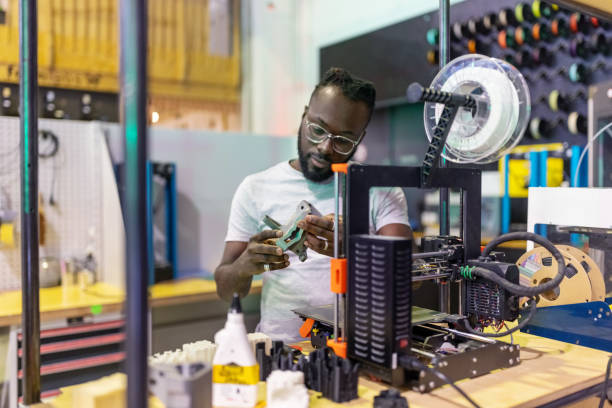
3D printing technology, also known as three-dimensional printing or additive manufacturing, has witnessed a large change in the way of designing, developing, and manufacturing products. In medicine, manufacturing industries, and the arts, 3D printing is pointing toward several opportunities for advancement for people to grab. This revolutionary technique of building or modeling objects by accumulating layers from these developed models can significantly reduce the construction time frame and cost and have a manageable wastage amount.
As 3D printing technology is quite young and continues to evolve day by day, it seems that many new firms and people discover that it has phenomenal potential indeed. If you are an entrepreneur, an engineer, or just a hobbyist who also would like to print or design stuff on your own, information about 3D printing is now more valuable than ever. This article will give the reader an overview of 3D printing, discuss its applications, and make the reader understand how it is disrupting production and design.
What is 3D printing technology?
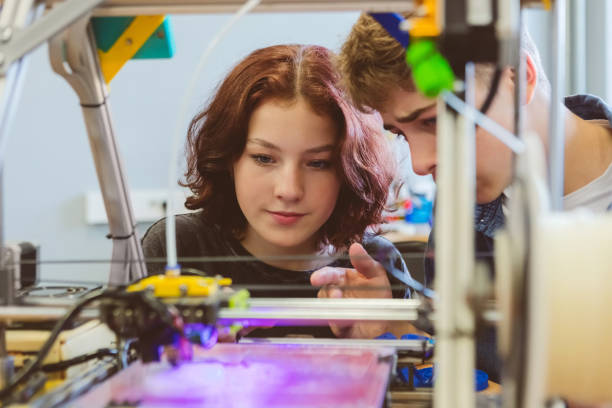
In its simplest terms, 3D printing can be defined as an industrial process that involves joining granules of powdered material to make a solid part through an intermediate of inkjet printing. Thus, the digital file in the form of computer-generated design stays the actual copy; however, as a digital file, it remains in the cloud, as the actual hard copy of the object to be printed. This is in stark contrast to most manufacturing techniques that remove material from a block of material in a subtractive manner; this is an additive process that adds material only where it is needed.
This method provides a fairly high degree of freedom in regards to structure and designs, where one can design very interesting shapes and forms that cannot be designed using any other technique. As for 3D printing, most of the materials that are utilized are in types of plastics, metals, ceramics, and biomaterials, depending on the kind of production.
The Evolution of 3D Printing Technology
The development of 3D printing technology started in the early eighties, when few patents on some sort of AM were applied. Over the last few years, the growth rate of 3D printing technology has been quite high, and what was largely used in industries a few years back is today being used by the consumer segment.
Initially, 3D printing was employed as the method of creating models: with tools, engineers and designers were able to convey their ideas into tangible models quite easily in the manner of procrastination. Since technology was being favored to be accepted and implemented, it became so easy to have home-based 3D printers. Presently, 3D printing seems to have adopted its usage in aerospace and aviation industries, automobiles, the healthcare field, fashion industries, as well as many other industries, with many other uses being encountered every day.
Key Applications of 3D Printing Technology
They are not even tied to a particular field; this is due to the flexibility of 3D printing technology. Here are some of the most prominent applications:
Medical Advancements:
This country has therefore registered some progress with regard to the medical area. In all these areas, the most outstanding application is the prospect of personal prosthetics or implants. By this technology, physicians can develop models of a given size and shape that will be appropriate for a specific patient to improve the relevance of devices in the health sector. Additionally, cell-based or bioprinting for the creation of tissue and organs is an envisioned modality in the field of customized treatment.
Manufacturing and Prototyping:
The traditional method of working on different new product concepts used to involve models that required expensive molds and time-consuming manufacturing processes, which have been eliminated by 3D printing because firms were able to create fully functional or aesthetic models with less cost and time. This has led to a reduction of time taken in developing products across almost all sectors, such as automobiles and electronics.
Aerospace and Automotive:
Recently there are few testimonials for the usage of 3D printers in aerospace and automobile industries with the view of the usage of lightweight, strong parts fabricated by them. This is quite far in this regard to achieve the aim of losing some number of weights of different vehicles to minimize fuel consumption and emissions. Further, these are likely to be created as such small details or details in small portions, or it would not be, for example, profitable to manufacture them in any other way.
Fashion and Jewelry:
Fashion and jewelry designers are also using 3D printing technology. It also makes it possible to establish highly complex bespoke designs that were previously unthinkable. Mapping, Design. Whether that is a one-of-a-kind bracelet to be worn by a particular person of choice or designing an entire series of clothing articles, it brings a legendary level of artistry into one’s hands through 3D printing.
Construction:
The use of 3D printing technology is being considered in the construction industry in a bid to mobilize the affordable houses. This is therefore an indication that large-scale 3D printers are currently in a position to print entire buildings both from concrete and other construction materials. Presumably, it can help regarding solving the housing shortage problem and reducing the cost of construction in the future.
How Does 3D Printing Work?
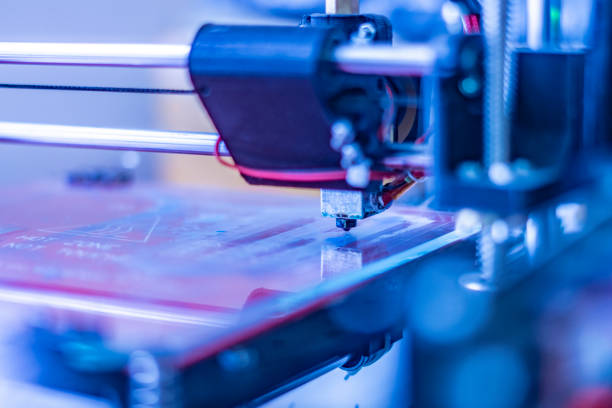
IT 3D printing begins with creating a three-dimensional image by designing with a CAD tool or making a photocopy of an optical scan. Once it is designed, it is subdivided into thin cross-sectional layers on which the 3D printer begins to build the object in layers. The printer then goes to instructions that have been set by the digital file and lays down material; it could be plastic, metal, or something else on a surface.
The 3D printer continues along this process and then builds up the complete object using the layers. In general, after most of the material and printers, the object may require post-processing, for instance, to be cured or painted.
Advantages of 3D Printing Technology
Customization: An additional significant benefit of a 3D printer is that the production of unique items becomes possible for the most part. As different as specific medical devices or down to clothing or art pieces, with 3D printing, what can be made is what is needed.
Cost-Effective Production:
Traditional methods of prototyping require expensive molds and tools, which is not possible for small quantity production, and batch manufacturing is especially appropriate for 3D printing since they do not require very complex molds and tools.
Faster Time-to-Market:
3D Printing Technology The main cycle of design 3D printing technology can be affected faster with the help of the software in question. 3D printing technology contributes towards an overall intensification of product development. Therefore, firms can obtain in the real sense how their ideas perform, which we regard to be a shorter time to market and expense reduction.
Sustainability:
The largest lots of waste are usually experienced in the production of bulk material since the process involves the subjecting of large blocks to the removal of material. Unlike other methods of manufacturing that subtract material to create the desired form of an object, 3D printing is therefore the additive technique and requires only the amount of material needed in creating the object that is to be produced and is hence eco-friendly.
The Future of 3D Printing Technology
Considering the recent changes in the idea of 3D printing technology, even more improvements can be forecasted for the nearest future. Similar improvements to the material used, the rate at which the printing is done, and the capabilities of the machine shall extend the efficiency of 3D printing. On the other hand, the methods that have recently appeared as trends in designing and printing, such as artificial intelligence and machine learning, will also contribute to further automation of the process and entail greater accuracy and individualization.
Conclusion: The Impact of 3D Printing Technology
3D Printing Technology. It has influenced or has redesigned the cause, practice, physical makeover, re-engineering, and reinvention of manufacturing, designing, and innovation. This州itself creates the chance for industries to develop new products; it’s personalized and comparatively cheap in terms of technology. The creation of the products enables industries to produce the products that the consumers need most. From medicine and science to aviation and fashion: everyone can create influential 3D printing technologies according to the post.
As more industries look at the potential of 3D printing, it may only grow from here on out. Understanding or awareness of 3D printing technology is a requisite for anyone who wishes to succeed and stand out today and tomorrow in an even more complex, innovative world.
FAQs
What can you create with or through 3D printing?
Regarding the material used, 3D printing can use almost any material as long as it can be melted or solidified: Such as plastics: PLA and ABS, metals: stainless steel and titanium, ceramics, and organic material. It provides that how the nature of the properties demanded rigidity, ductility, or heat-resisting capacity, etc., depends upon the use that is intended to be given to the object and the selection of the material.
Is 3D printing expensive?
The cost of this 3D printing depends on the type of 3D printer required, the type of material used, and the type of model required. The pro industrial printers are costly compared to the consumer-level printers, which have lowered their prices and made the technology reachable to the average businessman or hobbyist.