
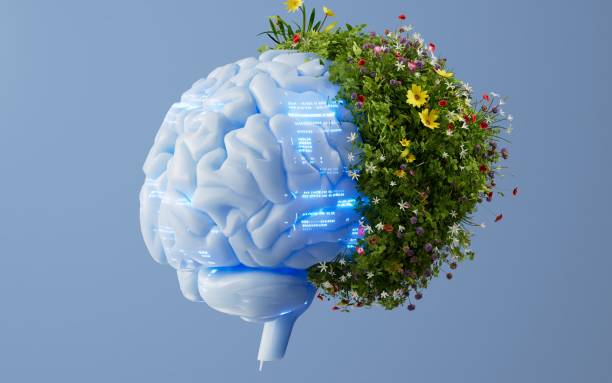
AI in Agriculture
Agriculture, as we all know, is among the very first activities that man has engaged in right from the creation, and even to date, it is among the basics that humans feed on in terms of foods as well as daily requirements such as fruits, vegetables, and grains, just to mention but a few. But at the same time, the amount of global citizens is increasing year after year, and the question of how to feed them using less or non-affected by climate zones and areas farming techniques becomes an acute one.
Over the years, artificial intelligence (AI) has assumed significant importance in agriculture as a tool that holds the potential to revolutionize how farmers operate on their farms. It forms apply to everything from improving crop yields to improving resource management, and AI in agriculture offers original solutions to several of the industry’s greatest challenges.
For the purpose of this article, we propose to take a look at just where, how, and why AI in agriculture AI in Agriculture? The advantages of AI in Agriculture, and what the farming of the future might look like in an era of integrated smart technology. We will also look at the four-acre farm and the one-thousand-acre farm and what AI means to the backbone of modern farming.
What is AI in Agriculture?
AI in agriculture is a process of implementing artificial intelligence and technology, computational science, and knowledge based on machine learning methods and tools to the various facets of farming. Farmers should embrace artificial intelligence technologies to enable them to get big data for the production of the right decisions, improving yield and reducing losses. AI bears a wide-spectrum opportunity in agriculture because it can help in crop care, pest removal, irrigation, and soil analysis.
encompasses the Internet of Things, often abbreviated as IoT, technology through which farmers can receive data from the fields, machinery, and animals through sensors. As such, these systems allow particular techniques of categorizing data patterns, which are often not selectable by people, and will improve farming productivity.
- Applications of AI in Agriculture
- Precision Farming
Precision farming is one of the most well-known applications of AI in agriculture. This approach involves the use of artificial intelligence and devices to diagnose the condition of the soil and when to warn about weather and conditions of the crops. Real-time monitoring makes it possible for the farmer to monitor such factors as moisture, temperature, and nutrient content of a given area of the farm, and hence enable modifications of interferences as dictated by the needs of the various parts of the farm.
For instance, AI can help farmers determine the approximate level of danger in planting crops at any time and the probability of good climate or an undesirable type of soil. This reduces the risks of low yields and ensures that improved yields are achieved to the maximum. In addition to this, the AI-based systems can show the phytotoxicity, signs of growth of the nutrient deficiencies or pest, and farmers can follow the results in order not to get this throughout the entire property.
Self-Propelled Plant & Vehicles
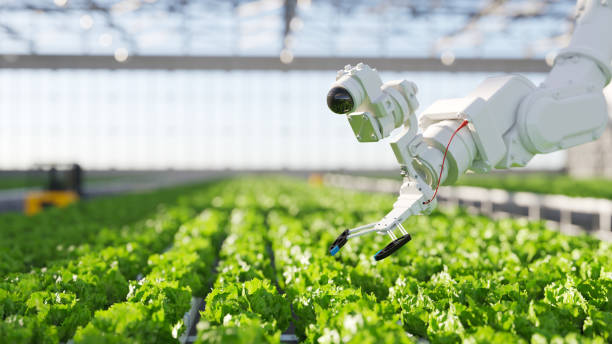
Moreover, another area that AI in agriculture will revolutionize is the self-propelling equipment in tractors, harvesters, drones, and many others. Most of these machines have incorporation of artificial intelligence, which allows them to plow fields, sow crops, and even reap produce without involving human beings.
The benefits of autonomous equipment are clear: They reduce the role of human power in farm work, they conserve fuel, and hence they improve the efficiencies of farming. Other benefits associated with the use of AI machinery include the ability to work all through contributing to time-conscious performance, most importantly where there is a lot of planting and/or harvesting to be done.
IPM as an innovation stands for Integrated Pest and Disease Management.
Pest and disease control is one of the four areas in agriculture that would experience a drastic shift because of the use of artificial intelligence. Chemical control, also referred to as broad-spectrum control, has its disadvantages because it involves the use of broad-spectrum pesticides that are Several disadvantages exist as regards the use of broad-spectrum insecticides by the method; they include the contribution
on the environment is high, and it also promotes resistance in pests. AI solutions, on the other hand, can observe diseases or pest attacks on crops and recommend what to do about the actual problem.
Another way pest infestations can also be predicted is by using machine learning, where the program makes future pest outbreaks by using statistical data and climatic data, the environmental data of the past. The method does not rely on pesticides and related ills to beneficial insects and crops as farmers avert through early-stage treatments.
Resources that may be covered include crop management and yield estimation.
Activities such as crop monitoring and yield prediction are cases where AI is touted as being very relevant. Through satellite images, drones, and even ground sensors, AI can have the ability to monitor the health status of the crops right from the growing season. Such tools help farmers to feel when they are constrained, for instance, by the availability of water, change in nutrient requirements, or pests.
They can also look at the historical yield data, the weather conditions, or the environmental conditions and deduce yields that are correct. They include helping farmers in taking the right decision on whether to plant, harvest, and market their crops to maximize their profit and minimize loss.
- Benefits of AI in Agriculture
- Gerhard also noted that the use of ICT has many benefits in that it has led to improvement of efficiency and productivity in workplaces.
The first advantage of AI in agriculture is the improvement of the productivity of the farming processes. Some of such activities, like watering, use of fertilizers and pesticides, and many others can be done mechanically; it would not only cut a considerable amount of time but it would also reduce the cost of hiring labor. In addition, the water for irrigation or other uses can be controlled to the required levels, and so are fertilizers and pesticides, and all in all, optimum and selective utilization of the inputs and thereby minimum pollutive discharge to the environment takes place.
Enhanced Sustainability
In agricultural business, management of the environment is of utmost importance, and this is being boosted by artificial intelligence approaches for the improvement of agricultural sustainability. I conclude that this method of precision farming based on AI can help to increase the sparing use of water, reduce the usage of chemical substances, and make better usage of the land. Therefore, by increasing the precision of the impact of interventions, AI makes farming less harmful to the environment.
Better Decision Making
Currently, AI assists farmers in arriving at decisions based on the analysis of data, the latest information, and trends, including the likelihood of the future. This leads to improved decision-making on which crops to cultivate, when to embark on planting, when to irrigate, and how to curb attacks by nuisance-forming pests that affect plants and crop production. Through using the AI tools, the farmers can reduce the threats associated with losses in crops and poor yields.
Challenges and Considerations
On the brighter side, it appears that the benefits associated with the AI in agriculture are numerous; however, there are, strictly speaking, a couple of concerns. Difficulty in affording artificial intelligence technologies is one of the major factors that hinders a broader adoption of the technologies in industries. AI is also expensive because small-scale farmers lack the capital to incorporate AI tools, sensors, and machinery that are inherently self-operational. Besides, there is the need for skills to implement these technologies while some farmers may need to be trained in how to use systems that employ artificial intelligence.
Data privacy and security are also the two aspects of the matter that cannot be dismissed either. Rather, AI should guarantee that all the information that farmers gather as well as submit through such systems is safeguarded and used in the proper method. This would include ensuring that farmers own their data and are not exploited; this formed the basic step of ensuring that AI in agriculture.
The Future of AI in Agriculture
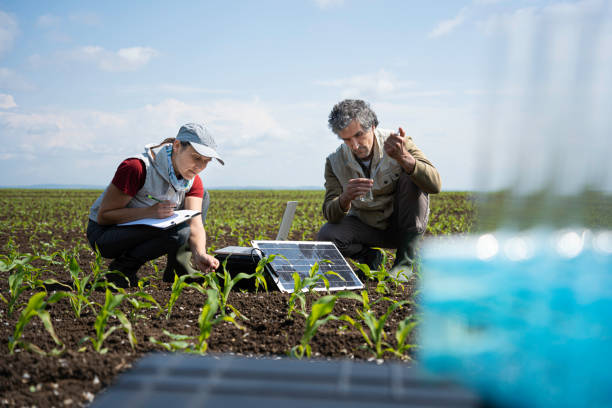
The future of AI in agriculture As technology advances, it seems that the future is secure. On that expectation, it is possible for the next generation of AI applications to enhance the upliftment of productivity, reduce effects on the environment, and increase the possibility of accuracy in agricultural business. autonomous tractors used for seeding and harvesting crops on their own, drones that fly over the farm and inform owners that crops look tired and weak are still not enough.
But when worked hand in hand with other frontier technologies like blockchain and 5G networks, then AI will enhance other related agricultural systems and therefore fashion out smarter chains and better farming mechanisms.
Conclusion: AI in Agriculture How to get there: What’s the sustainable smart future capable of making possible?
It is not only the new hype, but it is a necessity for the future of farming AI in agriculture. Farmers who do not adopt AI technologies therefore lose on factors such as productivity increase, cost-cutting, and environmental impact. It is in methods such as self-driving tractors, smart sprayers, or even brain-operated drones for pest control that the future of agriculture is being slowly carved by artificial intelligence, not only to the benefit of earth’s inhabitants but the planet as a whole.
To some extent, the following advances and uptakes of AI in agriculture will be the critical success factor for addressing the current and future limitations resulting from increased and global population and climate change. It is possible to establish that introducing technology to nature is the key to the emergence of an ideal, environmentally friendly, and safe agriculture industry.
FAQs
How does AI in agriculture help farmers to reduce costs?
This paper aims to identify how the following activities can be reduced through the use of AI technology to reduce costs incurred by farmers and increase their efficiency: watering, fertilizing or spraying pesticides, and pest and disease checking. This also optimizes the use of inputs, for instance, water, fertilizer, and pesticides in a way that reduces wastage, thus cutting on costs.
Is AI in agriculture feasible for small-scale farmers?
Yes, the small-scale farmers can also benefit from AI in agriculture. The first expense that one would likely meet when adopting AI technologies might be quite expensive, but the available cheaper solutions include using the AI-based apps and mobile applications where farmers can monitor the health of crops, certainty of yields, and conservation of resources without having to acquire costly machinery.