
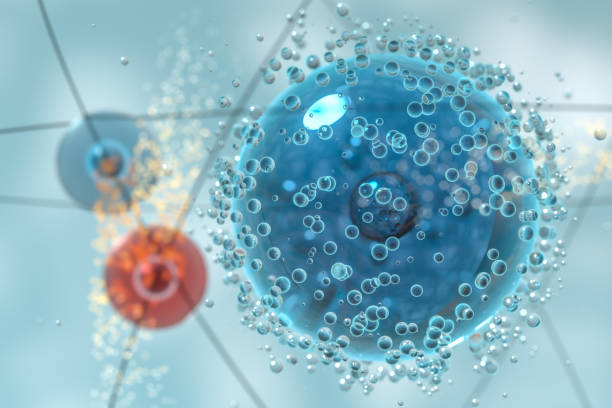
What is Cell and Molecular Biology?
Biology Cell and Molecular Biology is the subspecialty field of endocrinology that is concerned with cells, cell organelles, and the very chemical processes that take place within the cell. It combines features belonging to cell biology and molecular biology in order to analyze the stroma, growth, development, and functionality of organisms on a cellular and molecular level. By that way, one can have a basic concept of life ranging from DNA contained in the nucleus of the cell to numerous proteins regulating the occurrence within the cells.
The main aim of cell and molecular biology is to understand the ways by which the cells transmit information, how the cells respond to the signals received, how they multiply, how they form special tissue, and how they die. Recognition of these processes is crucial in the areas of medicine and in pharmacology, biotechnology, and regenerative medicine.

The Structure of Cells: The Building Blocks of Life
In the center of Cell and Molecular Biology is the cell. One cannot doubt that every living object, let alone a single cell that is a structure of higher complexity, consists of cells. Cell is among the most important functions in life, and its structure is such a very broad, as people living in this world.
There are numerous organelles in both prokaryotic and eukaryotic cells; for instance, there are mitochondria, ribosomes, and endoplasmic reticula, some of the organelles that aid the cells.
DNA: The Blueprint of Life
Cell and Molecular BiologyThe DNA molecule occupies one of the main roles in understanding cell and molecular biology. The DNA is the genetic material of an organism, and it provides that organism with information on how to evolve or maintain itself through growth. Nested within these lateral or elongated cells, DNA arrives in sequences of chromosomes: heredity coils that contain all the information needed within a cell.
Molecular biology, as the title suggests, is primarily an issue of how this DNA replicates, transcribes to RNA, and how the RNA in turn translates into protein. These proteins have a wide task in various cellular processes; they can act as enzymes for catalyzing a chemical reaction and can be structural and also act as signaling molecules.
The Role of Proteins in Cell and Molecular Biology
It also identified globules as other macromolecules in Cell and Molecular Biology. They are amino acids and are used in a lot of capacities, including roles that involve structural components and as an enzyme. Regarding the principle functions, proteins can take part in virtually all processes a cell may go through, from signal transduction all the way through to the immune response.
Sometimes molecular biologists focus on how proteins are synthesized in ribosomes, how they become conformed to certain work-related structures, and how they interact with other molecules in the cell. This research has benefitted people since, with therapies and drugs, it identifies specific proteins that halt many diseases like cancer.
Gene Expression: Right from DNAs to functional proteins
Gene expression is a broad term that describes the translation of the information in the gene into the synthesis of a useable product, predominantly a protein. This process involves several stages: Transcription is the process by which a gene is transcribed so as to produce a molecule of RNA, whereas translation is the process by which an RNA molecule is used to synthesize a protein.
One of the major objectives of cell and molecular biology is to identify the genes that are active in the somatic cells concerned. As a result, when genes are switched on or off in response to certain stimuli, more can be appreciated about mechanisms of diseases like cancer and other diseases that originate from irregular genetic actions. However, the cornerstone of such an idea is gene expression, especially in regard to the creation of a technique of branded medicine that may be taken depending on the genetic plan of an individual.
The Impact of Cell and Molecular Biology on Medicine
The medical sector is most likely one of the most significant Cell and Molecular Biology uses in today’s world. Molecular and cellular analyses knowledge of diseases thereby makes it possible to treat as well as therapeutically manage the conditions.
For instance, advancement in treatment of cancer has come about by understanding how cancerous cells are different from normal cells in terms of molecules. Doctors have also identified precise gene specifications that allow cancer cells to become malignant and grow out of control, then develop drugs to outlaw those impacts.
Additionally, gene therapy and stem cell engineering for genetically inherited illnesses are potential candidates for treatments or cures. Thus, knowing the molecular nature of pathologies: Cystic fibrosis, sickle cell anemia, muscular dystrophy; in these diseases, C pharmacologists understand how to alter genes at the cellular level.
Similarly, advancements in microscopes have allowed investigators to track cell actions in actual time, strengthening data on how cells function as well as communicate. It is, however, clear that these technologies are extending further capability for exploring consistencies in cells and molecules.
The Future of Cell and Molecular Biology
The future of cell and molecular biology is optimistic and sunny, as much potential for further development is seen as of yet. Accumulated and advanced technologies let all of us get more detailed and adequately accurate maps of cellular events and molecular signaling. This is bound to create room for new cures to diseases, new biotechnology advancements, and even the existence of life.
They are also starting to take cognizance of the implications of synthetic biology as it undertakes to design whole organisms at the molecular level for the specific purpose of performing specific functions. These may have implications in sensitive areas like environmental conservation, farming, as well as exploration of other planets.

Conclusion
Biological science is an essentially young science, and time and again, it is unlocking mysteries of life. It has at some point been applied to elaborating on how cells function and how they communicate, as well as the cause of diseases through genetics. The knowledge of molecular regulation of cellular processes is assisting researchers to build up knowledge for developments in biotechnology and other related disciplines, including pharmacogenomics as well as numerous others. Adding to this, with the help of strengths in technology, cell and molecular biology still go to the higher and sustainable quality of living.
FAQs
Where and why is protein cell and molecular biology needed?
AP—signaling and catalysis are two major functions of proteins that are needed in almost all processes occurring in cells that involve structure formation. It means understanding how proteins are produced, their relationship to other molecules, and how some of them are involved in certain processes in cell and molecular biology.