
What is Augmented Reality?
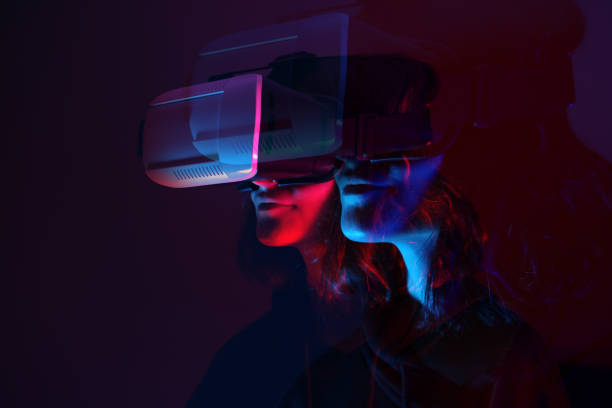
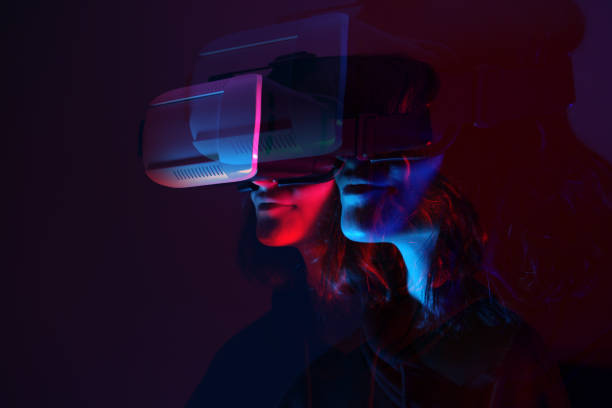
Here it is defined as capability that lets graphics, images, sound, and nearly all types of data pop into a real environment. This programmatic continuity seems to sustain and positively enhance our apprehension of reality as an interactivity. Virtual Reality (VR) constructs an environment from scratch for a learner, Augmented Reality (AR) adds components to the real physical space for the learner.
This is because AR works could fairly be described rather vividly with examples such as the smartphone based game the Pokémon Go whereby NPCs are visually arrested and players can see the Pokémon directly through the smartphone screens cameras. PlayWay embodies considerable potential of how AR operates, when it became an integrated part of a real environment and uses in real time the virtual reality.

How Does Augmented Reality Work?
This is the most fundamental tech that all of the AR devices have in common and it is the ability to capture real space. For this to happen, a set of sensors, cameras and software algorithm become a framework on which AR systems can be built. These together are utilized in real-world environment to observe objects and plane facades to precisely place the content overlay.
For instance, in retail store, AR can be used to overlay virtual furniture on real environment using Smartphone app that demonstrates how an item looks like in a given home if bought.
Key Applications of Augmented Reality
Influencing a diverse range of industries, B2B has infinite potential for revolutionizing organizations’ performance and shifting consumer vendor dynamics. It is now time to turn our attention to some of the biggest fields where the AR is already making the difference.
Retail and Shopping
In retail industry, the magical benefit of enhancing the shopping experience happens to be in augmented reality. Some buying decisions companies are using AR because customers can decide whether the dress will fit them or how a particular furniture will look like in their house. For example, the IKEA’s Augmented Reality application allows a client to visualize how an item of furniture will look on his/her house.
Healthcare
As to the present, AR is increasingly applied to healthcare for improving the education of medical staff, patient’s treatment and operations. With the application of AR, a surgeon is likely to obtain necessary information of the patient once denied from reaching for, thus avoiding making possible mistakes. Besides, augmented reality allows you to develop games for rehabilitation, where patients themselves go through a course of therapy.
Education
In the sphere of education it is also solved, opens AR interactive means for learning in the education industry. Live applications enable the learners to touch and manipulate items that they cannot see or encounter in a face-to-face class environment such as 3D models and history related items. This phenomenal mode of learning affects the compliance of class attendance and general student performance significantly.
Gaming and Entertainment
This, of course, is one of the most well-known of all applications of Augmented Reality. Games like Pokémon Go and Harry Potter: Wizards Unite have introduced the players to the context where a character together with an object as a game item integrates with real physical world. Entertainment industry also uses AR in the making of beautiful scene in the movies where AR is found useful as a mode of paring out stories.
Navigation
AR has over the years significantly influenced mobility in unfamiliar or unfamiliar territory. Real-world environment is overlay into real-life scenarios like navigation where Google Maps carries the directions of the apps on top of the user environment to enable the user to follow the directions better. It will be of most importance for the pedestrian and car users who move within the urban city areas or those who are in a position to make different crossings of the various interconnection of roads.
Manufacturing and Design
AR in manufacturing and design presents the solution of increasing compliance with the prescribed standard and of improving precision. The models and new products that the engineering and architecture personnel come up with can be realizable through augmented reality. This guarantees that any issue that may occur in the production process of the specific design is noted at the design developmental stage thus do not require redesign, which is both costly and time consuming.
The Future of Augmented Reality
Which is something that is quite promising about Augmented Reality it seems that there is no particular limit for it and as the technologies are developed more intricate and extraordinary applications are sure to be discovered. The highlighted area of application is the application of AR in wearable technology namely smart glasses. Future competitor to smartphones are developed by Apple & Google that will add the digital information into a user’s field of vision without the use of a smartphone.
As the given technology develops it can be used in still more fields, both industrial and civil, in fields such as tourism, social networks and auto-navigational systems. The future of AR appears very bright and we can be positive about one only fact that this technology will bring additional significant factors that will change testing environments.
Advantages of Augmented Reality
AR brings numerous advantages across various sectors, including:
Enhanced User Experience: Since AR combine online information with reality, the user gets a feeling that is informative as well as entertaining.
Increased Engagement: Depending on the sector concerning retail and education, AR helps increase learners’ entertaining and efficient ways to experience products and materials.
Improved Accuracy and Efficiency: AR enhances top quality and contributes to improving the choice-making procedure of specialists in various sectors, includingmedical and production.
Cost Savings: Besides this, it has been found out that through the use of AR, the utilization of real models, demonstrations, and test runs is eliminated, which in fact means a lot of money in the development and marketing of products.
Challenges Facing Augmented Reality
However, the potential with augmented reality is huge, even though the technology has some drawbacks. Another concern is high requirements for the hardware resources; this implies high-performance requirements usually noted for strong specifications, and as a rule, it is expensive for the business and a customer. Also, there is an enhanced focus on the user’s privacy and confidentiality, especially in the situation when the functioning of AR depends on the tracking of the users’ movements and the receipt of the identification data.
Moreover, their use is still very innocuous in different sectors, given that it is relatively new AR technology, owing to the technical limitations and the stakeholders’ lack of understanding of the possible uses of this new technology. With every emerging development in technology, these challenges would most probably be solved as the technological development advances and gets popular.
Conclusion
Peculiarly, augmented reality is surely one of the greatest technical inventions of the present day. Starting from enhancing the shopping experience to even revolutionizing the facial structure of health care and education through augmented reality is conceivable. However, there’s even more positive outlook for the future of AR, which is very bright in spite of the fact that there are remaining challenges that have to be considered. As the technology advances, the technology is bound to change the ways by which an individual will be able to engage the digital and physical world.
FAQs about Augmented Reality
What devices support augmented reality?
All the present smartphones and tablets have the aspect of augmented reality through cameras and sensors. However, smart glasses and AR headsets can be used for specific usage in different categories of applications.
Where are the key differences between augmented reality and virtual reality (VR)?
AR places an image digitally on the physical world but VR replaces the physical world with their computer generated world. AR take what already exists in the real world and enhances it while VR provide a completely different environment.