Fitness Ball Exercises for Pregnancy
This is a great time in every woman’s life but then again, this time can be a little challenging as well. Pregnancy means your body experiences lots of changes, so it is crucial to stay active and support your physical health. These are a great way for pregnant women to tone muscles, straighten postures, and alleviate most of pregnancy complaints. In this article we are going to learn the advantages of using a fitness ball while pregnant, learn some effective and safe exercises, and respond to some frequently asked questions to stay as healthy as possible during this period.The Benefits of Fitness Ball Exercises for Pregnancy
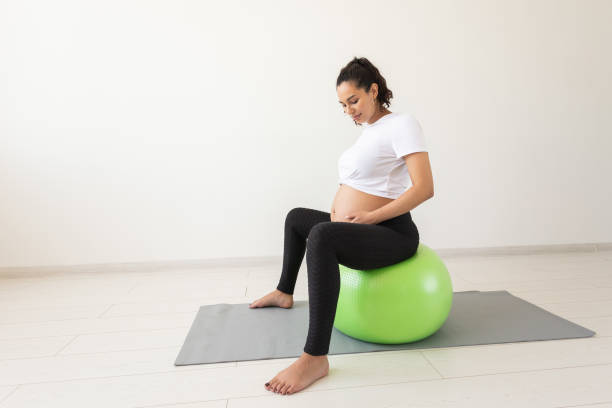
When correctly executed, fitness ball exercises are a host that benefits pregnant women. The stability of the exercise ball is illusional, and when one gets right on it, not only the intended muscles but other muscles also work; it is a complete, mild, full-body exercise. Some of the key benefits of fitness ball exercises for pregnancy include:

Improved Posture:
This is so since stomach fat not only alters your posture with time owing to pregnancy advancement but also causes you back pains and aches. This tool also strengthens your stomach muscles and relieves pressure and pain to the spine if carried out by sitting on the fitness ball correctly.
Relief from Back Pain:
Fitness Ball Exercises for Pregnancy pregnant mother frequently reports pains in the lower back due to changes in posture when carrying the baby. Exercises such as that, which incorporate pelvic tilts and gentle stretching, strengthen the back muscles, hence easing pain that is caused by the growing baby bump.
Pelvic Floor Strength:
The pelvic floor muscles need to be strengthened for labor and delivery, which the fitness ball exercises do. It can also be of help during childbirth in order to increase the degree of maternal control and improve postnatal health strengthening.
Increased Flexibility:
Swinging lightly on a fitness ball will allow you to become flexible, particularly in the hip and lower back areas, which are likely to experience stiffness when pregnant.
Improved Circulation:
On the other hand, crawling on the ball constantly helps to provide new blood supply continuously, hence contributing to preventing water retention common among pregnant women, particularly in the ankle and the feet.
Safe Fitness Ball Exercises for Pregnancy
However, for any form of physical activity whereby you intend to incorporate a new activity, you need to consult your doctor first during pregnancy. If you’re given the green light, here are some fitness ball exercises that are safe and effective during pregnancy:
Sit on the fitness ball exercise—pelvic tilts.
- Pelvic tilts are a fantastic exercise to aid in building your abs and reduce the stress you have on your lower back. To perform this exercise:
- With your feet positioned at a width slightly less than shoulder width apart, keep your back straight and gently lower your body onto the ball.
- The curve in your lower back is made by bending your torso forward and leaning slightly backward.
- Then tilt it backwards, that is, round your lumbar region of the backbone.
- Next, do this for 10-15 times, decreasing the speed of movement and making it rhythmic and smooth.
Seated Bounces
- Seated bouncing increases the blood flow and helps move some parts of the body; thus, it is suitable for expectant mothers.
- To do this exercise, sit on a fitness ball and put your feet on the floor such that your knees are a little folded up to form a 90-degree angle.
- While swaying, it is done on your feet, moving your entire pelvis and lower back, getting from side to side in a rhythmic motion.
- They advised using a minute or two at most for entering the conversation and increasing the time spent talking as one gets comfortable.
Hip Circles
- Hip circles can also be used in stretching the hip and lower back muscles because they are damping exercises.
- Face the ball with your back. Now that you are holding the ball, ensure your feet are on the ground and your spine is upright.
- Rotate clockwise and counterclockwise, focusing on the tummy muscles.
- Go around the room 10 times in one direction and then jump to the other side.
Kegels on the Fitness Ball
- This comprises the contraction of muscles that are sited between the anal and the vaginal opening and common with labor and after birth.
- As for this position, your back should be straight and your knees bent; sit on the fitness ball.
- Visualize yourself as trying to most strongly suppress the urge to urinate, then, clench the muscles at the privates of your least powerful leg.
- However, when achieving the contraction, you should hold it…for…several seconds…and let it go.
- Breathe deeply 10-15 times; one must incorporate 3 sets in a day.
Wall Squats with the Fitness Ball as a Fitness Professional
- Ladies, wall sits target the legs, hips, and the muscle most women fail to exercise—the pelvic muscles, often referred to as the ‘inner six pack.’.
- Stand with your back facing the wall and avoid placing the fitness ball between the lower back and the wall.
- Gradually descend to the floor, moving into a squat-like position with the knees resting on the toes but not past them.
- You squat for at least several seconds and then get up.
- Perform 10-15 repetitions.
Pregnancy and using a fitness ball
While fitness ball exercises for pregnancy are generally safe, it’s important to follow a few key tips to ensure that you’re using the ball correctly:
Check the Ball’s Size: The fitness ball you are going to use should match the height of your body. If you are sitting on the ball, it is important that when choosing the right angle of the legs to the floor, your feet must touch the floor.
Avoid Overexertion: Listen to your body. In case of developing any feelings of steadiness or dizziness or pain or discomfort of any kind, cease the exercises and after waiting, then consult your health worker.
Balance is Key: Fitness can also involve the use of the stability balls because they assist an individual in regaining balance, but one should start using it while leaning against a chair or the wall to avoid falling.
Don’t Overdo It: That is why it is important to remind you that continuous and prolonged exercising sessions will actually pose no benefit to you.

Conclusion
If, as part of your usual exercise regime, these exercises are to be followed, then one will be in a perfect position to correct her position, reduce her backache, and tone her muscles used during pregnancy and childbearing. Attention must never be paid to signs that the body is communicating, and it is always better to consult a doctor before beginning any training, and one should never overstrain the body. The right exercises will of course give you the strength and flexibility that are essential during this wonderful time.
FAQs
Can mothers find relief from backache during pregnancy with the help of exercises done on a fitness ball?
In fact, fitness ball exercises are very advantageous when it comes to handling back pains that occur during pregnancy. These exercises strengthen the tummy muscles and also assist in putting less stress on the back muscles by encouraging posture. Especially helpful are the kinds of turns, such as the pelvic tilts and seated bounces, if one has pain.
Can using a fitness ball be done during the third trimester?
In general, the exercises using a fitness ball are safe for all the pregnant women, no matter the trimester; the third trimester especially. Just however, before engaging in such exercises and performing them during the most recent phase of pregnancy, it is advisable to seek your doctor’s permission. Make sure that participants do not struggle while doing the exercises in a bid not to exacerbate some conditions.